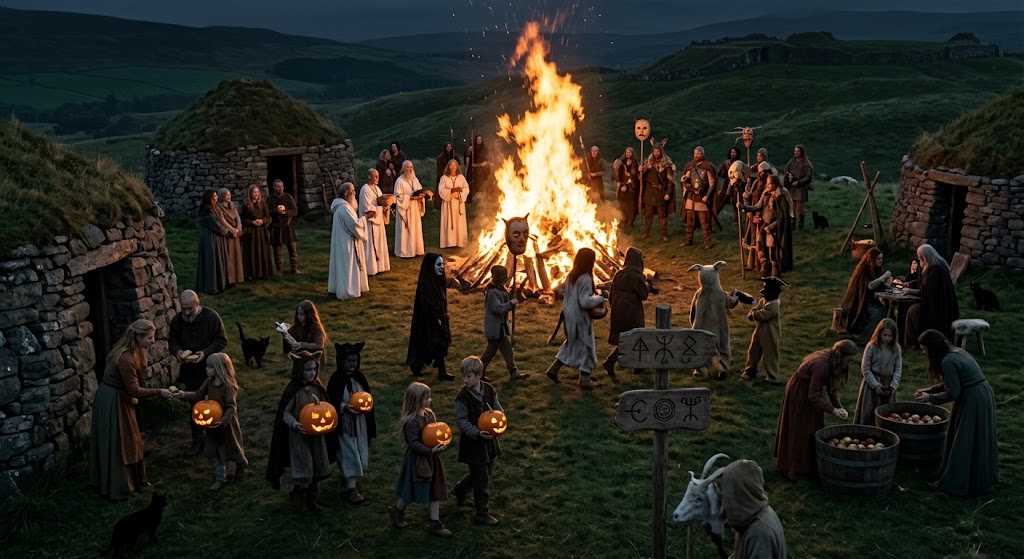
 Excited children masquerading as witches, ghosts, goblins, demons, and other grotesque characters skip through the neighborhood, knocking on doors and chanting “trick or treat.” They hold out sacks waiting for a piece of candy or other goodies, joining in parties at school, church, or Sunday School to bob for apples, tell fortunes, or walk through “haunted houses.” With decorations of jack-o’-lanterns, witches on brooms, and black cats with arched backs, it is “Halloween”—one of the strangest days of the year.
Are Halloween activities really just the simple, innocent holiday fun most people believe them to be? Where did this holiday originate, and why is it celebrated? History provides the answers.
Though it was the Roman Catholic Church that designated the October 31st date as All Hallows Eve—or the “eve of the holy ones”—in prelude to November 1st All Saints’ Day, earlier pagan peoples gave the annual holiday the sinister meaning and traditions it still holds. As historical sources note, American celebrations rest upon Scottish and Irish folk customs traced in direct line from pre-Christian times. Although Halloween has become a night of rollicking fun, superstitious spells, and eerie games that people take only half seriously, its beginnings were quite otherwise. The earliest Halloween celebrations were held by the Druids in honor of Samhain, lord of the dead, whose festival fell on November 1st.
It was a Druidic belief that on the eve of this festival, Saman (Samhain), lord of death, called together wicked souls that within the past 12 months had been condemned to inhabit the bodies of animals. The Druids—an order of priests in ancient Gaul and Britain—believed that on Halloween, ghosts, spirits, fairies, witches, and elves came out to harm people. They also thought the cat was sacred, believing cats had once been human beings changed as punishment for evil deeds. From these Druidic beliefs come the present-day use of witches, ghosts, and cats in Halloween festivities.
Halloween was considered the night for the universal walking about of all sorts of spirits, fairies, and ghosts, all of whom had liberty on that night. Pagans believed that on one night of the year, the souls of the dead returned to their original homes. There was a prevailing belief among nations that while the souls of good men were taken by good spirits to paradise, the souls of wicked men were left to wander between the earth and the moon or consigned to the unseen world. These wandering spirits were in the habit of haunting the living, though there were means by which these ghosts might be exorcised.
To exorcise these ghosts and free yourself from their supposed evil sway, you had to set out food—giving the demons a treat—and provide shelter for them during the night. If they were satisfied with your treat, it was believed they would leave you in peace. If food and shelter were not provided, or if they were unsatisfied, these spirits would “trick” you by casting evil spells and causing havoc.
Trick or Treat
The modern custom of “trick-or-treat” began in Ireland hundreds of years ago. A group of farmers went from house to house begging food for village Halloween festivities in the name of their ancient gods, promising good luck to generous donors and making threats against those who would not give. Thus, these ancient pagan traditions continue today as youngsters masquerading as ghosts, skeletons, and demons go “trick-or-treating”—begging for food while promising to refrain from evil deeds.
October 31
It was the Celts who chose the date of October 31 as their New Year’s Eve, originally intending it as a celebration of everything wicked, evil, and dead. During their celebrations, they would gather around community bonfires and offer sacrifices of their animals and crops.