To uphold the Protestant Reformed Faith upon which our
National Constitution was established.

Author Archive

The Battle of Britain – when God answered our prayers

By Peter Simpson


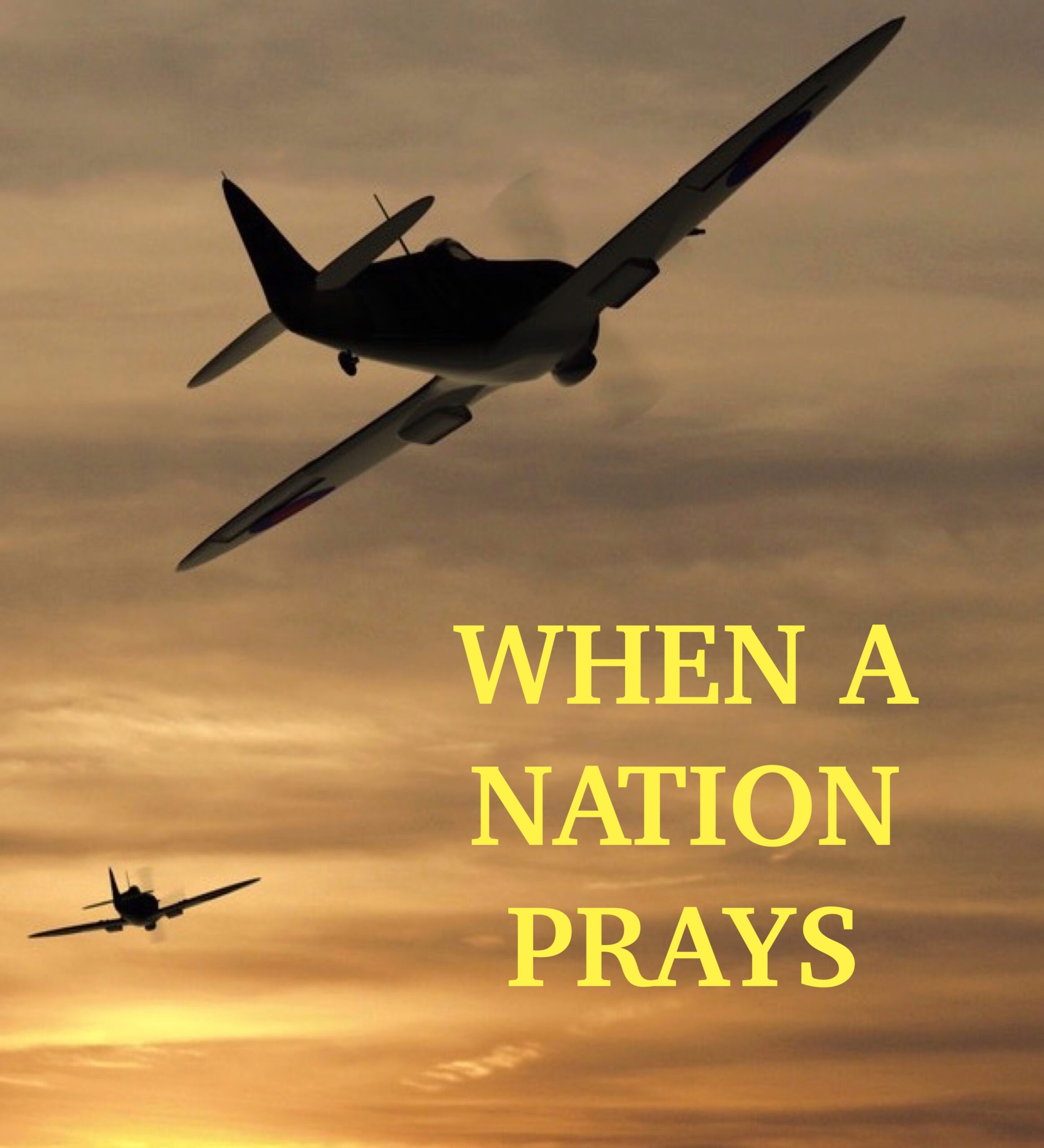
September 15, is Battle of Britain Day. It is good to commemorate it. This day in 1940 is highly significant in our nation’s history, because it marked a turning point in the great battle raging in the skies over Southern England in the late summer of that year. The issue at stake in this aerial combat was very straightforward: Would the nation be overrun by a mighty invader or not?

Another key date worth noting, for two reasons, is September 7, 1940. The first reason is that on this day RAF reconnaissance planes observed German invasion barges being transferred to various ports of embarkation on the other side of the Channel. They could not remain there for long, because the Nazis knew that the RAF would quickly endeavour to bomb them. Therefore Operation Sea Lion, the German code name for the invasion, was definitely imminent, and the destruction of the RAF was the indispensable prelude to the success of the operation. Indeed, this goal of wiping out Britain’s airborne defences once and for all had actually been pursued by the Luftwaffe since August 13. Goering had originally imagined that the task would be accomplished within four days of the action commencing – how mistaken he was. 

August 15 was the most intense day of fighting in the whole of the Battle of Britain, with the Luftwaffe flying 1,786 sorties, in particular targeting the RAF’s airfields and radar stations. On this day the Germans lost 75 aircraft and the RAF 34. The Germans were inflicting much damage, but the desired knock-out blow against the RAF was not yet materialising. 

The next phase of the Battle of Britain began on August 24, and British losses were mounting. Come September 6, the situation had become desperate, with 289 RAF planes shot down in the previous fortnight, along with 171 seriously damaged. The German attacks on the airfields increased in the final week of August. Fighter Command was stretched to the limit, and 25 per cent of its pilots were either killed or injured. Some new pilots were sent up with only single-figure hours of training on their Spitfires and Hurricanes, whereas at least 30 hours was necessary to match the skills of the German pilots.  

Now let us return to September 7 and the second reason why this date is significant. It marked the beginning of the Luftwaffe’s ‘blitz’ upon London. The decision to target London represented a dramatic change of strategy by the Nazi high command. They hoped that the destruction of much of the capital city would crush and demoralise the nation. However, this diversion in strategy actually worked to Germany’s grave disadvantage. Arthur Ward in his book on the Battle of Britain titled A Nation Alone informs us how a key wing commander of the Luftwaffe, Major Adolf Galland, described this change of direction: ‘We knew that we were close to knocking out the RAF, but . . . switching over from attacking the British air defences to the air battle against London and other civilian targets was a big strategic mistake.’ The change of tactics yielded a vital week of respite and recovery for the RAF’s fighter airfields, enabling them to be able to counter effectively the German aerial onslaught.

Then arrives the particularly significant date of September 15. This marked the ultimate and supreme effort by Goering to apply the final killer blow to Britain’s defences, thus opening up the way for Operation Sea Lion to proceed. The German bombers had more fighter support than ever before. On this day, all over southern England, a mighty aerial confrontation took place. Twenty-six RAF fighter squadrons took to the air. 11 Group of Fighter Command had no reserves to resort to, though, thankfully, 12 Group, which oversaw the defence of the Midlands and East Anglia, could also be called upon. 

Despite the enemy’s huge numbers on September 15, many of their aircraft failed to reach their targets in London, hindered as they were by the RAF’s fighters. Sixty German planes were shot down on this day, and this was enough to ensure that the Luftwaffe failed yet again to achieve its long-sought goal of bringing London to its knees and of destroying the RAF’s defensive capability. Hitler postponed the invasion on September 17, and it never took place.

In this strategic blunder from a German perspective of shifting to the bombing of London as opposed to targeting the RAF’s airfields we observe an amazing outworking of God’s sovereign control of the affairs of nations. He was intervening, answering and anticipating the solemn prayers for help rising up to Him from many people all around the country, for Britain in 1940, unlike today, had not yet become a nation that had lost all apprehension of the concept of the providence of God overruling in the affairs of men.

In this context we must introduce one more key date, which will not feature in the history books: Sunday September 8, 1940. This was a national day of prayer, called for by King George VI. It was the third such day since the outbreak of war. On this special day of intercession the churches were filled up and down the land as the people cried out to God for deliverance. Many of course would also have been praying continually before and after this date. The Lord heard the prayers of a humbled people, and graciously intervened, protecting the nation from being overrun by a formidable invader. 

The Bible plainly teaches that it is God who determines a people’s welfare in all aspects of their national life, economic, political, military and social. Psalm 144, verses 10-15, tells us that when a nation honours God, it will be safe from its enemies (military and political), its young people will flourish (social), its harvests and flocks will be abundant (economic), and it will be free from crime and civil unrest, which afflictions impinge upon all the aforementioned aspects. This psalm ends with the words, ‘Happy is that people whose God is the LORD’ (verse 15). 

This is the great lesson which Britain must learn today. We are a nation in deep crisis, even on the point of collapse. Our only hope is a return to the one true faith of Jesus Christ crucified for sinners. This means that many individuals on a personal level must repent of sin and trust in the Son of God for mercy and salvation. If by God’s grace this turning to Christ takes place, it will gradually have a wonderful purifying effect upon the nation as a whole, and the sovereign God will begin to honour the righteousness which He sees prevailing in the land. Then, and only then, shall we once more be able to rejoice in great confidence as a people, declaring that ‘the eye of the LORD is upon them that fear him . . . Blessed is the nation whose God is the LORD’ (Psalm 33:18,12).
 

JESUS

This is the name which is above every name, the name that is so precious to every sinner saved by grace. The reason for its preciousness is because of its blessed suitability to meet our need as lost, ruined sinners. We have to say:

“Here’s my claim, and here alone;

None a Saviour more can need;

Deeds of righteousness I’ve none;

No, not one good work to plead.”

We are not fond of acrostics, but we remember an old preacher describing the name of Jesus: “J-E-S-U-S: Jesus exactly suits us sinners.”

The name of Jesus means the Saviour. It was given to the eternal Son of God on His coming into the world of sin and sorrow. “Thou shalt call His name Jesus, for He shall save His people from their sins.” So the name Jesus has a blessed relationship with us as sinners.

Clearly does the Word of God reveal that Jesus is the only Saviour. “Neither is there salvation in any other.” One of Satan’s deceptions today is the popular teaching that there are many ways of salvation, and all lead to heaven. This is a subtle attack on the truth. At one time it was, “You are wrong!” but now it is, “You are rights but….so are many other religions also!” But there will always be something exclusive in real religion, for “there is none other name under heaven given among men, whereby we must be saved.” This is revealed to every grace-taught soul.

Jesus is an almighty Saviour, “able to save to the uttermost all that come unto God by Him.” What a view that is of the triumphant Saviour (Isa. 63:1), coming forth from Edom (the land of the enemy), with dyed garments from Bozrah (its chief city), “mighty to save”! The two vital lessons the Holy Spirit teaches a sinner are his inability to save himself, and the gracious ability of the Lord Jesus. So the Word speaks of “a Saviour, and a great one” (Isa. 19:20). If a child wrote that, no doubt the teacher would correct it and say, “Just write, ‘A great Saviour’”; but here is Holy Ghost emphasis: “a Saviour, and a great one.”

This name, the name of Jesus, is exceedingly attractive to living souls. We believe this is one point that unites the whole family of God; they can all say, “How sweet the name of Jesus sounds!” Some cannot speak much, but their desires and affections are drawn out when Jesus is exalted in the gospel. They can all feelingly say, “The desire of our soul is to Thy name, and to the remembrance of Thee.” They can sympathise with the old Welsh woman who walked miles each Lord’s Day over the mountains to the house of God. Her neighbours remonstrated with her about the foolishness of this. She could only understand Welsh and the minister could only speak English, and yet wind, rain and snow could not keep her away. “Ah!” she said. “8I can understand one word, the word ‘Jesus.’ And the minister mentions it so much. It is worth going to hear that!”

In the Song of Solomon, the name of Jesus is described as “ointment poured forth” – precious, fragrant, refreshing. Never shall we forget hearing a sermon, at the opening of a new chapel, on the text: “And maketh manifest the savour of His knowledge by us in every place.”

To the wicked the name of Jesus is as “the savour of death unto death.” We understand this to mean that if beautifully smelling roses were placed in a room where a dead man lay, their fragrance would mean nothing to him. So when Jesus is exalted in the gospel, there is no sweet fragrance in His name to those that are dead in sin – “the savour of death unto death.” How grace makes a difference!

“The vital savour of His name

Restores our fainting breath;

Believing, we rejoice in Him,

The Antidote of death.”

The name of Jesus is a worthy name, “that worthy name by the which ye are called.” Where the fear of God is in exercise, there is a dread lest we should be left to dishonour that name that means so much to us. We can bear hearing our own name evilly spoken of, but O the grief when the Lord’s name is blasphemed!

The name of Jesus is the sinner’s only plea, and he needs no other. It is an all-prevailing plea: “For Jesus’ sake.” It is our only plea in prayer, the ground upon which our prayers are answered. That is why often such poor p0rayers are so blessedly answered. It is “for Jesus’ sake.” It is also our only plea for acceptance with God. How can I, a guilty sinner, be accepted by a holy God? This is the vital question. And there is a blessed answer:

“These He accepts for Jesus’ sake,

And views them righteous in His Son.”

Finally, Jesus is the ground and foundation of our hope. We have no other. Our only hope is in the name of Jesus – that is, His precious name, signifying all that He is, all He has done, all that He still does, exalted in heaven;

“Then let the name of Jesus be

To us supremely dear;

Our only, all-prevailing plea,

For all our hope is there.”

Our prayer often is that our unworthy names might be written on the Saviour’s heart. “Set me as a seal upon Thine heart.” And His worthy name is written upon the sinner’s heart. It was said that cruel Queen Mary died with the word CALAIS written on her heart – she was so distressed about its loss to the French. The child of God dies with the name JESUS written upon his heart.

B.A. Ramsbottom,

Gospel Standard, February 2000

WESTMINSTER : Protest and witness outside of Parliament over dangers of Islamophobia legislation

By Pastor Peter Simpson

Pastors Peter Simpson and John Sherwood staged a witness and time of public preaching time outside of the House of Commons in Westminster on Wednesday March 12th, with a particular emphasis on the grave concern felt by Bible-believing Christians at the establishment by the Government of an ‘Islamophobia Council’ to look into the whole issue of redefining ‘Islamophobia’. Their task is to deal with the increasing problem, as the Government sees it, of anti-Muslim prejudice in the UK. The preachers had with them special posters and a specially prepared leaflet on the subject produced by the Christian Watch organisation, and which was written by Pastor Simpson.

Far from their being anti-Muslim prejudice under which Muslims are labouring, Islam seems to be ever increasing in numbers and influence in the UK, and if there is in a few quarters serious criticism of Islam, this in no way implies any hatred for Muslim people or prejudice against them personally. There is, however, genuine concern in the country about Islam’s inability, because of its very nature, to integrate into British culture and into the country’s Christianity-based civilisation. It needs to be remembered that Islam is an all-pervasive political and social system, as well as a religion, and the goal of any faithful Muslim adhering to its core teachings nothing less than the Islamisation of the whole earth.

The preaching by the pastors outside of Parliament was of course in the context of the Christian loving his neighbour. Such love, however, does not negate the duty of any true Christian to point out the dangers of all religious falsehood and error which are contrary to the Biblical revelation. Christian love does not demand weakness and the abandonment of primary Christian teaching in order to promote what is called multicultural community cohesion.

The posters on display read as follows : 1) ‘Islamophobia legislation is a threat to free speech, especially of Christians. It represents a pro-Islamic blasphemy law’; 2) Christians love their Muslim neighbour, but must be free to criticise Islam on Biblical grounds”; 3) ‘Christians are persecuted in Islamic lands. It is not hatred to highlight this and condemn it’; 4) The Lord Jesus Christ says that He is the only way. That means that other religions are false. Christians must have the freedom, in love, to say so’. It was encouraging to see members of the public walking by carefully reading them.

Islam refutes uncompromisingly the very heart of the Christian message, namely the deity of Christ as the eternal Son of God appearing on earth as a man, and His sacrificial death upon the Cross as the only means of atonement between God and the sinner. In short, Islam and Christianity are completely irreconcilable. As far as Christians are concerned, to deny Christ’s deity and Sonship is to deny God the Father also. So we are not in the realm of two mildly different approaches to worshipping the same God. Any faith system which denies the deity of Christ, and His unique mediatorial role, is not worshipping the God whom Christians worship.

This is why the preaching outside of Parliament strongly criticised the recent holding of an Islamic Iftar event in St. George’s Hall, Windsor Castle on March 2nd. This event included Islamic prayer, and that is the crunch issue; it was in effect an act of Islamic worship endorsed, obviously because of the venue, by the Supreme Governor of the national Church. We must take this on board. This was an act of worship not directed to the one true Trinitarian God (Muslims openly deny the Trinity).

The chief executive of the Ramadan Tent Project who organised the Windsor Castle event praised King Charles for his commitment to ‘community cohesion’. One might courteously ask, however, how many mosques, either in the UK or anywhere else in the world, would be willing to host Christian pastors offering up prayers to the Lord Jesus Christ as being the final prophet to bring God’s revelation to mankind, the fully divine Son of God, and the only way for sinful men to reach heaven?

The leaflet which was handed out in Westminster pointed out that all around the Islamic world Christians are being severely persecuted for their faith. Of the top 12 persecuting countries in the Open Doors World Watch List for 2025, in no less than 10 of these the persecution is at the hands of Islam . Therefore, Christians must have the freedom to criticise and condemn Islamic teaching and practice. We must be free to assert that Jesus Christ is the only way. Also, the Government must have a proper regard for Britain’s distinctively Bible-based Christian identity, which is integral to the very constitution of our nation.

After the witness at Westminster Pastors Sherwood and Simpson moved on to Marble Arch and preached the precious gospel of salvation there for a while. May the Lord be pleased to use these proclamations of Biblical truth in the capital city to His own glory.